 Isaac Hess
September 2026
Every Offseason, Doc Was There
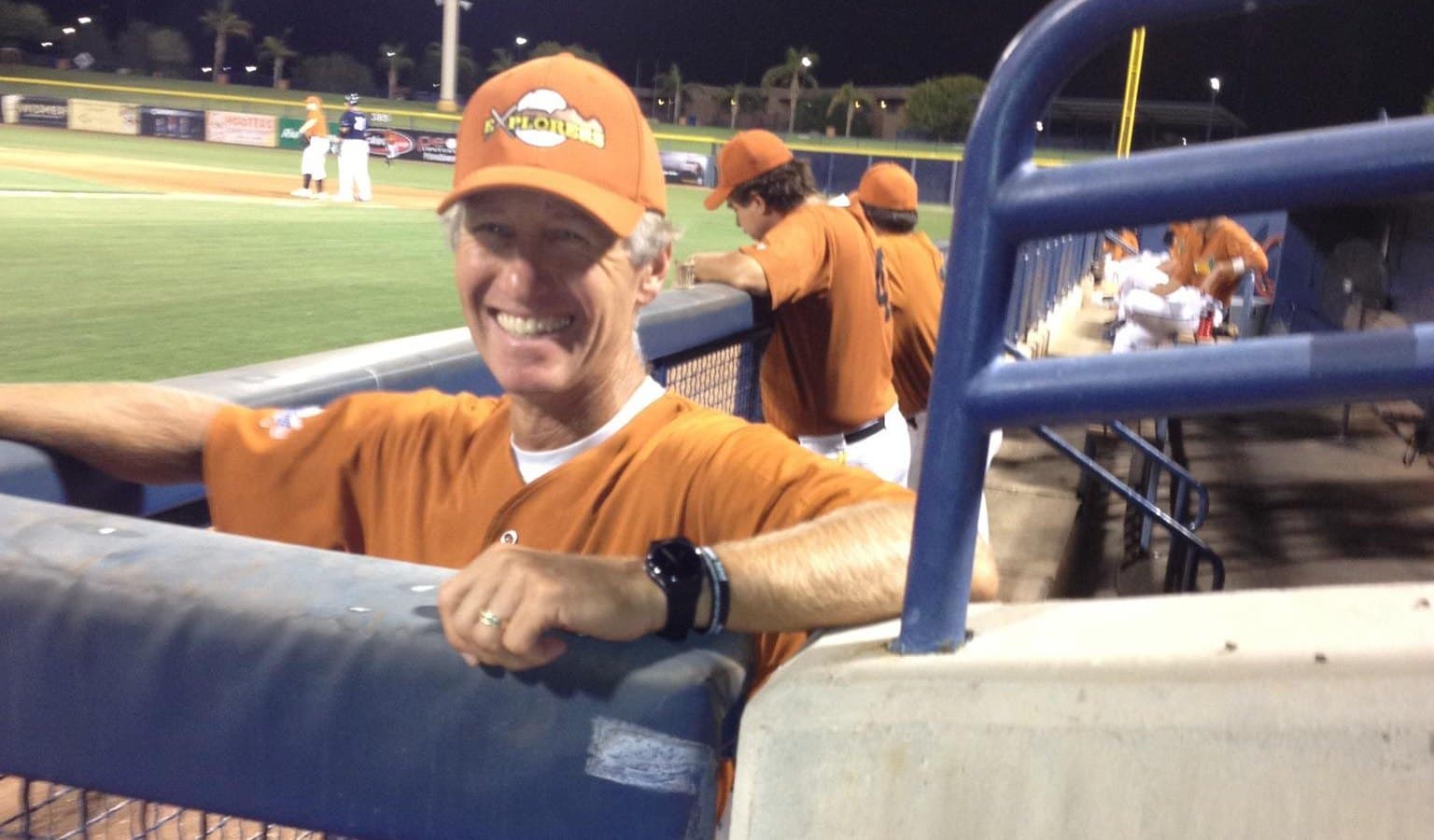
Here is something nobody tells you about professional baseball at the level I played it.
The season ends and everyone scatters. Your team dissolves in a parking lot in September and you go home to whatever home is, and the sport that has organized every hour of your life for six months just stops. No coaches. No catcher. No schedule. Nobody keeping track of whether you throw today.
And you still have to throw. That's the whole job. The arm you show up with in February is built in the months when nobody is watching, and there is no version of that where you do it alone.
For me, in Phoenix, it was Doc.
Dr. Robert Larson
He was my throwing partner. That phrase does not carry nearly enough weight, so let me try to load it properly.
A throwing partner is somebody who shows up. That's it, and that's everything. Not for money, not because a team assigned them to you, not because there's a game at seven. Somebody who drives across town in the offseason, on a Tuesday, in the heat, to stand sixty feet away and catch a baseball you need to throw.
Every offseason I came back to Phoenix, Doc was there. Any time I passed through, Doc was there. For years.
I never had to wonder whether he'd say yes. That sounds small. In a career where almost everything is conditional (your roster spot, your innings, your contract, whether an organization decides your hip is a liability), having one thing that was never conditional is not small at all.
What he actually was
He was more like a second father to me. Or a big brother, depending on the year and what I needed.
I've written before about the men who wrote my name on a lineup card: the managers and coaches who decided I got to keep playing. Doc was never one of those. He had no authority over my career. He couldn't get me signed, couldn't get me innings, couldn't call anybody on my behalf.
Which is exactly why it counted. Everyone who could do something for my career had a reason to be around. Doc had none. He was just there, consistently, for a very long time, with no angle whatsoever.
That's the definition of a mentor that I've landed on after twenty years of thinking about it. Not the person who opens a door. The person who's still standing there when a door closes on you, holding a glove, asking if you want to get some throws in.
He's still that today. I texted him this morning, which is honestly most of the reason this post exists. I sent the message, thought about how long he's been doing this for me, and figured I should say it somewhere he can read it.
He's in his sixties and he still pitches
I want to make sure this part doesn't get lost, because it's not a footnote. It's a big reason I'm still playing.
Doc is in his sixties. He's in better shape than most people I know who are half that. And he still pitches.
When people find out I'm forty-one and still throwing a hundred pitches in a game, they treat it like an anomaly. It didn't feel like one to me, and I think that's because of him. I spent my twenties throwing with a man decades older than me who hadn't quit, wasn't planning to, and clearly had no interest in the conversation about when he should.
You don't argue yourself into that. You catch it from somebody. I never had to decide that a body could keep going, because I'd been standing across from the evidence every winter.
Twenty-one years on a replaced hip, and the reason I never seriously entertained stopping is partly that the guy I threw with never did either.
To Doc, and to his family
I've been given a lot in this game by people who had nothing to gain from giving it. Doc and his family are at the top of that list. They took me in during stretches when I was between seasons and between certainties, and they never once made it feel like a favor.
I don't think I've ever said any of this to him plainly. We're two baseball guys; we say it by showing up with a glove.
So: thank you, Doc. For the offseasons, for the catch, for being the same person every single time I came back through Phoenix, and for being a walking argument that the ceiling everyone describes to you is negotiable.
I'll be in Phoenix again. Bring your glove.