 Isaac Hess
The full story
They took the jersey off my back twice.I pitched seven seasons anyway.
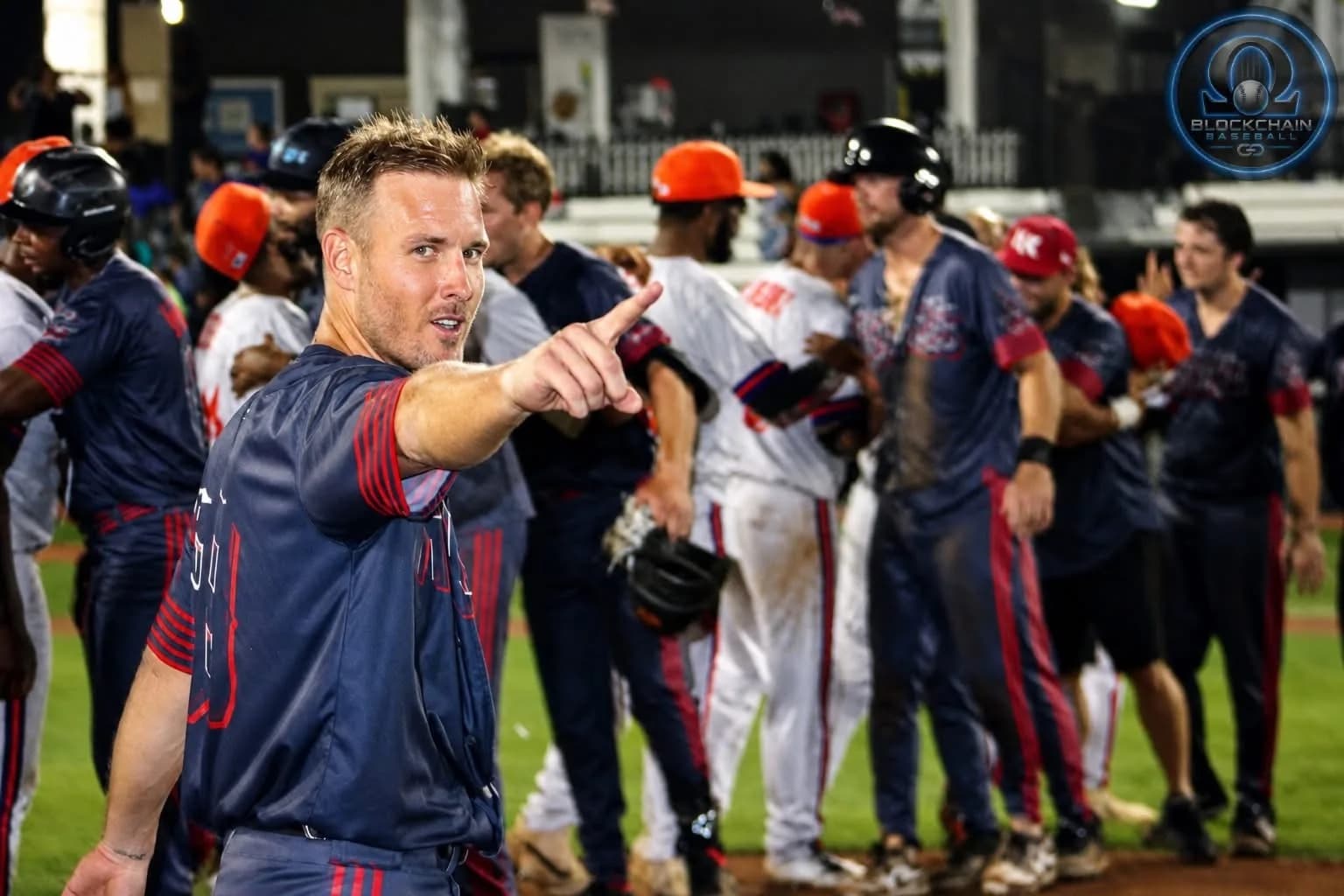
Most of what follows I first wrote down in 2011, for a Baseball America writer, at a point when I was still trying to convince somebody to give me a chance. I found it again recently. I've added the fifteen years since.
Perthes
When I was seven I was diagnosed with Legg-Calvé-Perthes disease. The ball of the femur doesn't get the blood it needs, part of it dies, and the body calcifies over the damage, which then grinds away the cartilage around it for the rest of your childhood. They put a pin in my hip for over a year. I spent six weeks of the summer between first and second grade in a half body cast, from my belly button to my left toe. No running or jumping for a year.
Then I was fine. I played every sport every season. Football from ninth to eleventh grade, baseball all four years, and I wrestled as a sophomore. It started hurting again around fifteen and I played through it on a lot of ibuprofen. By nineteen the hip was essentially bone on bone, with osteoarthritis and avascular necrosis, and it hurt every day.
The log cabin up north
I knew I wanted to play professional baseball from about ten years old: the feel of driving a ball over a fence, the smell of my glove, Saturday night under the lights. Because of the hip I couldn't play at six, seven or eight. I started at nine and that was it.
My mom raised my brother and me on her own. She was at every game, and she was the ridiculously loud one in the stands. I was never embarrassed by that. Not once.
She always talked about a log cabin up north. That was the dream she'd mention. So the reason I wanted the big leagues (the actual reason, underneath the competing and the ego and everything else) was that I wanted to buy my mother that cabin, because I thought she'd earned it several times over.
She never saw me pitch professionally. She died the summer before my first game.
August 2004
I graduated from Shadow Mountain High School in Phoenix in 2003 with a 4.27 GPA and a provost's full-ride tuition waiver to ASU. I went to junior college instead, at South Mountain, because I wanted to play. After that year Washington State offered me a full ride and I took it.
My mom and I packed the car and drove twenty-two hours to Pullman. On the way out of town I stopped at the hospital to see my dad. He was terminally ill with cancer and I knew it was the last time I would ever see him. I went anyway, because staying would have meant missing my first semester, and he would not have wanted that.
On 17 August 2004 I reported for my team physical. They would not clear me. They told me to stop playing competitive baseball altogether, and that I shouldn't have a hip replacement before thirty because of the wear on the joint and the risk of a revision. I'd pitched in the Connie Mack World Series in Farmington, New Mexico less than a week earlier. At that point I didn't really know what a hip replacement was.
The scholarship couldn't be taken back, so I kept it and stayed. The coach had to keep me on the roster he'd spent it on, and made his feelings about that clear at every practice I was required to attend.
My father died on 25 September 2004.
The decision
A man named Paul Laxalt changed the course of this. He'd worked with my aunt years earlier, he had the same Perthes I had, and he'd had a hip replacement at twenty-five. He was so plainly happy that he'd done it young that he talked me into getting a second opinion. Tom Novak (my pitching coach, and someone who has believed I belonged in the big leagues longer and louder than I have) pushed me the rest of the way.
Dr. Wilmink in Arizona looked at the deformity in my femoral head and socket and said that yes, even at nineteen, I was a candidate. I decided I didn't want to spend my twenties in pain, and that a hip that bad was going to wreck my back and my other joints while I waited for permission.
That spring my mom and I went to a meeting together to learn what my life would look like after the operation: what I'd be able to do, how I'd have to move. About a week and a half later, on 22 May 2005, she died of a heart attack, out with her girlfriends. She had sat with me and learned how to help me through a surgery she would never see. My medical insurance was through her, so it went with her. My aunt Pamela got me re-covered so the operation could still happen. She has been the rock of our family ever since.
I had a total hip replacement on 25 July 2005, two weeks before my twentieth birthday. My father on 25 September 2004, my mother on 22 May 2005, and my hip two months after that. Eight months, end to end.
I don't want anyone to feel sorry for me at all.
The years they wouldn't let me play
Four weeks after the operation, on 22 August 2005, I started at the University of Arizona. I was on a cane that morning and I left it behind that afternoon. I was nineteen and I wasn't going to walk around a new campus with a cane.
In my first weeks there I recognised a face in one of my classes: Travis Anderson, who I'd played Babe Ruth ball with at fourteen. He'd been a three-sport varsity athlete before a car accident at fifteen left him paralysed from the neck down. I sat next to him. He had a tattoo on his leg he'd got afterwards. It translated to "what doesn't kill you makes you stronger." I have never once thought of my hip as a burden since that afternoon.
I rehabbed myself. Yoga turned out to be enormous, and a book called Core Performance by Mark Verstegen taught me most of what I know about maintaining a body. Six months post-surgery I was throwing off a mound, pain free, with about 150% of the range of motion I'd had before.
Then I rode my bike to Coach Wosikowski's office every single Monday for a full semester (twelve Mondays) asking him to put me on a summer team. He wanted me for my senior season. The university's doctor wouldn't pass me, purely because of the replacement. I volunteered to sign away every ounce of the school's liability. I told him I'd sign my life away. He said no anyway, and they took the jersey off my back for the second time.
Eleven months after the surgery I threw six innings and over a hundred pitches for the Casa Grande Cotton Kings, so I knew what my body could do even while I was being told it couldn't.
My roommate Mike Keyes, another lefty, threw with me every other day for a year and held me to it when I didn't feel like it. When I finally got a professional roster spot I wore number 14 because 14 was his number growing up. I mailed him the jersey at the end of the season.
The tryout
Jon Kazanas, a White Sox area scout, had wanted to draft me out of junior college in about the tenth round, with a package worth around $90,000. I turned it down to go play PAC-10 baseball for free. A year later I couldn't get a physical passed anywhere.
He stayed in touch anyway, and told me about an open tryout in Tucson on 3 March 2007. I'd more or less stopped throwing. I decided that if nothing came of it I'd hang them up. I topped out at 87 and threw the best bullpen I can remember: fastball to both sides, curveball where I wanted it, changeup down and in the zone.
JJ Lally pulled five of the forty of us aside and said we were signable but there was no room in the organisation, but he could get us into independent ball. I told him I'd love to be in Chicago. He came through. Andy Haines called me that night from the Windy City ThunderBolts.
Seven seasons
I showed up to spring training two weeks late because I was finishing my degree, and I called my new manager beforehand to ask for an extra $50 a month. I did that because Tom Novak told me to. I did not get the $50. I genuinely did not understand that I could be cut.
I gave up two earned runs in my first twenty professional innings, went 8–1 with a sub-two ERA by the break, and made the All-Star team. We won the Frontier League championship that September. I pitched in four of the five games without giving up a run and was named MVP of the series. Two years earlier a doctor had told me I was finished.
That off-season Jon Kazanas sent me to Phoenix to train with Mack Newton, the man who had rehabbed Bo Jackson back to the major leagues after Bo's hip replacement, and who had two replaced hips of his own. JJ Lally tried to sign me to Low-A Kannapolis after that first season and the White Sox human resources department blocked it over the hip. Mack, who was close friends with Bo and with GM Kenny Williams, spent three months calling both of them on my behalf. It didn't work. That whole story is written up separately.
In 2008 I threw a complete-game no-hitter (the first complete game of my professional career and the first no-hitter in ThunderBolts history) and we won a second championship, only the second team in Frontier League history to repeat. I was named the number six prospect in independent baseball.
Then a third championship with the Calgary Vipers in 2009. A summer in the Czech Republic in 2012, eight teams in the whole country. A fourth championship with the Phoenix Prospectors in 2013. A last season with the Joplin Blasters in 2016.
Seven professional seasons. 44–25. 526 strikeouts in 548 innings. Four championships in seven years. Every number is on Baseball-Reference and I'd rather you check it than take my word for any of it.
The last two years
In 2024 I was the pitching coach for the Savannah Bananas' Party Animals. I'd moved my family out of California for what I understood would be a three-year run. They didn't ask me back; I was told it wasn't a good fit anymore.
We'd found out in June that year that we were having another daughter. A season of travelling everywhere would have meant missing the start of her life, so whatever happened was going to be all right. I started coaching in Richmond Hill, Georgia and began building MADE up again. Then we moved to Orlando, because my daughters' mother is Brazilian and Orlando is about as close to Brazil as you can get without leaving the country.
It has been a quiet couple of years and I've mostly been off social media through them. That wasn't a strategy. It was a hard stretch and a move and a new baby, and I put my head down.
Where I actually am
I'm 41 and I'm still pitching, and I want to be careful here because this is the part that sounds like a man talking himself up.
I'm more in sync with my body than I've ever been. Not as good as I was at 25, but genuinely better at knowing what it needs, which has turned out to matter more. The lessons compound. Twenty-one years of paying close attention to one replaced hip has made me more durable than I was when I had two original ones and no idea what I was doing.
I expect a hundred pitches out of myself every single game. It does not matter if it's a hundred degrees in Florida. I am running circles around 22-year-olds.
So here is the plainest way I can put it: I want to pitch for Cosmic Baseball, and I'm ready now. Not as a story, not as a novelty act, not as the guy with the hip. As a left-handed pitcher who will give you a hundred pitches in the heat and has four rings.
The last time I saw Mack Newton, in 2018, he told me his own life didn't start until he was forty-two: that's when it got good. He died in 2024. I have his logo tattooed on my hip, his kicking foot landing on my surgical scar.
I turn forty-two next year. I've always felt like there were more chapters to write, and I think that feeling is most of the reason I can still do this.
The record
Check any of it.
Windy City ThunderBolts
10–2 with a 3.28 ERA in 2007 and championship-series MVP; the first no-hitter in franchise history in 2008
Liga Mexicana
Diablos Rojos, 2010
Party Animals
Pitching coach, 2024: Banana Ball at Fenway Park
Seven seasons professional
150 games, 548 innings, 10 complete games and four championships, every one of them on a replaced hip
University of Arizona
Left-handed pitcher
MLB tryouts
Four organizations
If you're in it right now
This is for you
If you're facing a replacement, recovering from one, or being told what you'll never do again, here are three things I'd want said to me.
The list was written before anyone asked what you wanted
The restrictions you were handed are calibrated for the average patient, whose goal is to walk without pain. That's good medicine for that goal. If your goal is different, say your sport out loud, by name, and make them answer that question instead.
Waiting has a bill too
People treat delay as the safe option. I spent years compensating for a bad hip before mine was replaced, and compensating is how you wreck a back, a knee and the other hip. The cost of waiting just arrives later, in a different envelope.
Strength is the whole game
The single thing that has kept my hip working for twenty-one years is that the muscle around it is strong. A supported joint gets loaded less. An unsupported one takes everything. I have never once regretted that work.
Get the comeback in your inbox
Occasional notes on the grind, the gear, and what keeps me on the mound. No spam.