 Isaac Hess
August 2026
The Man Who Rebuilt Bo Jackson Taught Me How to Use My Hip
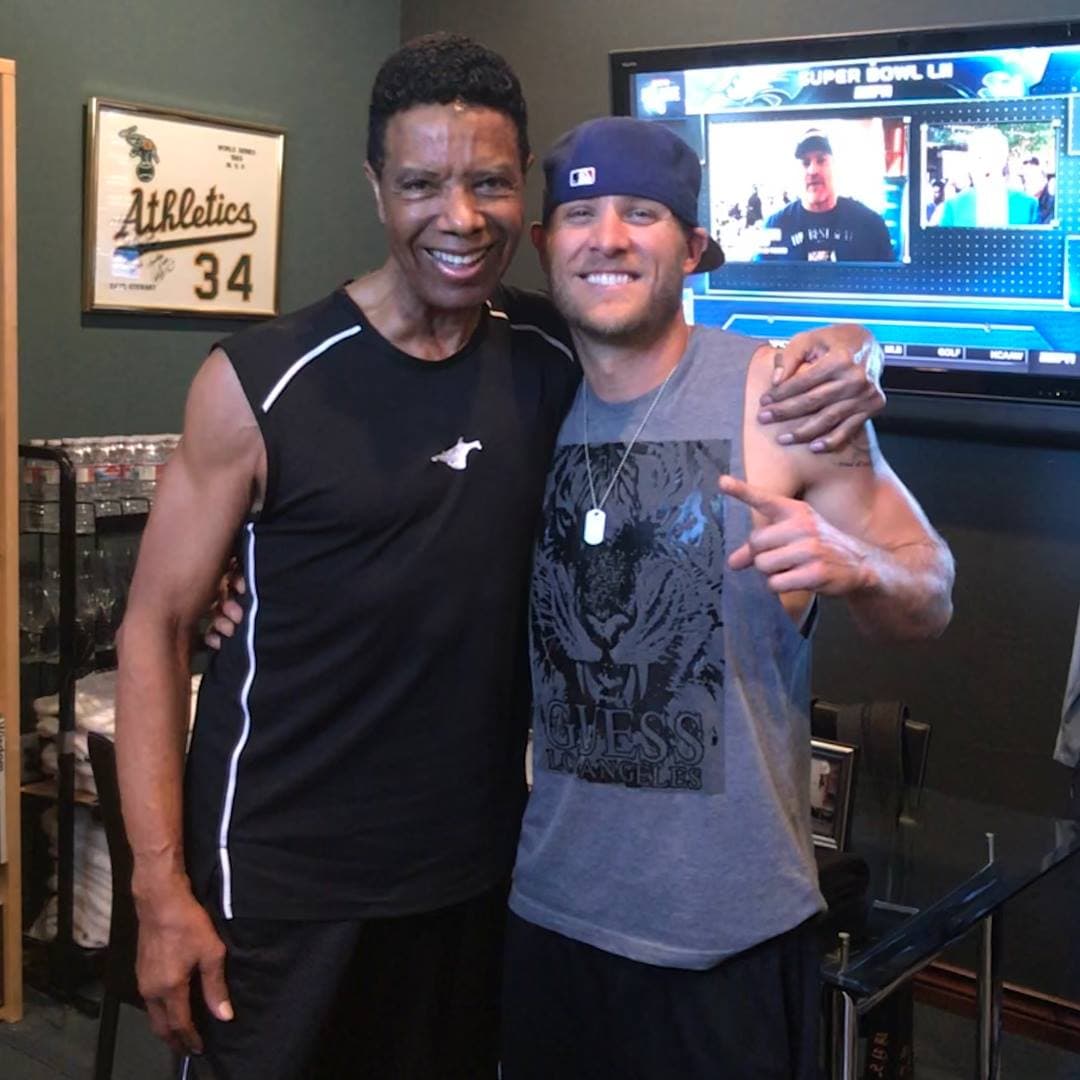
Three of us, and we all had the same operation.
Mack Newton had his left hip replaced in 1987 and his right one in February 1994, and he rehabbed himself back to teaching and competing in Taekwon-Do on both of them. In 1992 he was the man chosen to rehab Bo Jackson after Bo's total hip replacement, and Bo went back to Major League Baseball on an artificial hip, which nobody had ever done.
I had mine on 25 July 2005, at nineteen.
In the winter after my first professional season, a White Sox scout named Jon Kazanas sent me to Phoenix to train with Mack. I was twenty-two. I'd just won a championship with the Windy City ThunderBolts and I had almost no money.
"Say hello to this young man"
I was sitting in Mack's office when the phone rang.
He picked it up, put it on speaker, and said: say hello to this 22-year-old young man with a total hip replacement trying to come back and play pro baseball.
It was Bo Jackson.
I said, "Hi Mr. Jackson. Nice to meet you."
That's it. That's the whole conversation. I have replayed it for eighteen years and I have never once come up with the thing I should have said instead.
But think about who was on that call. The only man who had ever taken an artificial hip back to professional sport. The man who had rebuilt him. And a kid two years out of the same operation who was about to try it in a harder job, because Bo came back as a designated hitter, and I was a pitcher.
Pitching drives force out of the ground, up through the back hip, and rotates through it. A hundred times a night. Of everything you could ask a replaced hip to do, it's near the top of the list.
I went on to pitch seven professional seasons on mine. Bo played parts of three. I'm not saying that to compete with Bo Jackson, which would be absurd. I'm saying it because Mack was the connective tissue between those two facts, and almost nobody knows it.
Why Bo was on that phone at all
For years I told that story as a coincidence. It wasn't, and I only got the full shape of it back by digging up something I wrote in 2011.
After my first season, JJ Lally (the White Sox scout who'd found me at an open tryout in Tucson) wanted to sign me. There was a roster spot on the Low-A team in Kannapolis. I thought it was done.
Human resources blocked it. Not the coaches, not the scouts. HR. Because of the hip.
When I told Mack, he started making calls. He was still close friends with Bo Jackson and with Kenny Williams, the White Sox general manager, and he spent three months working both of them on my behalf, trying to get somebody to look past the joint at the arm.
It didn't work. I went back to independent ball.
But that's why Bo Jackson was on a speakerphone in Phoenix talking to a 22-year-old nobody. A man with two replaced hips was calling in every favour he had, for a kid he'd known for two months, who was paying him $200 a month that somebody else had quietly covered.
The room
Mack taught out of his Taekwon-Do studio in Phoenix. The sign outside said House of Discipline.
I took the noon class. He ran three a day.
On any given day the room might have Junior Spivey, who'd been an All-Star second baseman for the Diamondbacks. Dan O'Brien, the Olympic decathlete. Jerry Hairston Jr. Matt Kemp, when he was just breaking in with the Dodgers. The CEO of Oregano's and a stack of other executives.
And a thirteen-year-old kid, on the floor right next to me.
That mix was the point. It was mountain climbers until you couldn't, burpees, stretching, mental fitness, and you had to embrace his style; there was no version where you sort of did it.
But the part I actually took with me was this: he made you bring a journal.
Before class, everybody sat down and took notes while Mack talked. Life lessons first, then you earned the workout. A former All-Star, an Olympian, a restaurant CEO and a thirteen-year-old, all sitting on the floor with notebooks.
I try to do a version of that with my young players now. I'd like to run classes exactly like his one day.
The $625 I didn't have
He quoted me $625 a month.
I'd just finished a Frontier League season making $600 a month. I was shell-shocked. There was no version of my bank account where that worked.
So I told him the truth: I can't do this, but I'll do whatever it takes if you'll tell me how to make it up to you.
The next day he came back and said somebody had scholarshipped me. I'd pay $200.
I have thought about that transaction more than almost any other in my life. $200 was still enormous to me (it might as well have been $2,000), and that was the point. It landed at exactly the number where I had to stretch and could still say yes. Any higher and I don't think I could have got there psychologically.
It taught me what paying for value actually means, and that if you genuinely want something you find the way. I've never forgotten that he made me say it out loud first.
I trained with him for two months. Two months.
The voicemail
He was opening a restaurant around then, Max32. A health-food place. He loved it and it was giving him hell, the way restaurants do.
I left him a message. He had a standing policy of not returning calls (he got too many), so I didn't expect anything.
He called back.
He talked about the restaurant, the setbacks, the grind of trying to move it forward. And then he said, completely offhand, like it was the most obvious thing in the world:
"We're just responding like the champions we are."
I got a shiver up my spine, and I wish more than almost anything that I'd recorded it.
I have thought that way every day since.
That sentence is the reason I say "what up champion" to everybody I meet. It's the reason everydaychamp.com exists, the reason I've written a championship program, the reason the word runs through everything I've built. People probably find it annoying by now.
It came off a voicemail from a man with two replaced hips, talking about a restaurant that was kicking his teeth in.
The tattoo
I have Mack's logo tattooed on my hip. It's the image of him mid-kick, and his foot lands on my surgical scar.
That was deliberate down to the millimetre. I placed it exactly where I meant to.
I got it while he was alive, and I got to show him. He was fired up about it.
He talked about his own hips often and with real animation, which mattered more to me than he probably knew. I was twenty-two and quietly terrified about what my joint was going to let me do, and here was a man in absurd shape, teaching a martial art built entirely out of hips, on two of them.
"My life didn't even start till I was forty-two"
The last time I saw him was around May 2018. I got to introduce him to the woman I would marry.
He told me something that day I think about constantly:
"Isaac, my life didn't even start till I was forty-two. That's when things started really getting good."
I'm forty-one.
Mack Newton died on 1 August 2024. He was seventy-nine, and it was a stroke that got him, after hip replacements, knee replacements, and strokes he'd already refused to quit through.
His line, the one everybody who trained there can recite: You can throw up. You can pass out. You can die. But you can't quit.
Two months in Phoenix, at twenty-two, on someone else's scholarship. Seven professional seasons on the hip he taught me to use. Still pitching at forty-one, with his foot on my scar.
And one year to go before the good part starts.