 Isaac Hess
September 2026
Paul Laxalt Was the One Example
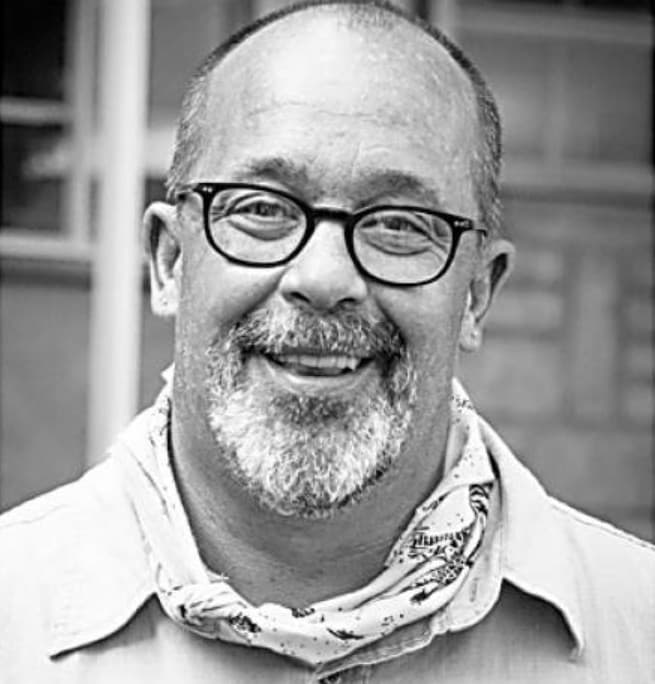
In the piece I wrote for parents of kids with Legg-Calvé-Perthes, the last thing I told them was this:
Find them one example. Not a statistic. A person. The single most useful thing for a kid with a bad hip is meeting someone whose hip was worse and who is fine.
I wrote that as advice. I should have written it as autobiography, because I got exactly one, and his name was Paul Laxalt.
Who he was to me
He'd worked with my aunt years earlier. That's the entire connection: not a doctor, not a coach, not anyone with a role in my life. A man who had crossed paths with my family.
But he had the same Perthes I had. And he'd had a total hip replacement at twenty-five.
At the time I was nineteen, my hip was failing, my father had died the previous September, and every conversation about the joint was a conversation about waiting. Put it off as long as you can. You're too young. Every year you wait is a year you don't spend on the clock.
That's not bad advice. It's the correct advice for the average patient. I've since written about why nineteen wasn't too young for me. At the time I had no way to know that, because I had never met a single person who'd done it.
Then I met one.
What actually moved me
Here's what I want to be precise about, because it's the useful part.
Paul didn't argue me into anything. He didn't present evidence. He didn't tell me what to do.
He was just so plainly, uncomplicatedly happy that he'd done it young.
That's it. That's the whole intervention. A man in front of me, some years down a road I was terrified of, visibly glad he'd taken it.
You cannot get that from a pamphlet. You cannot get it from a forum thread or a study or a surgeon's odds. Those things tell you what is probable. A person standing in front of you living the outcome tells you what is possible, and those are completely different pieces of information: one is about a population, the other is about whether a life is available.
He talked me into getting a second opinion. That's the only concrete thing he did.
The chain
That second opinion is the hinge of my entire life, and it's worth laying out how narrow it was.
Paul got me to go look. My friend Kyle Nyhart had blown out his shoulder and liked his surgeon, so I knew where to go. Dr. Wilmink said yes at nineteen and wouldn't tell me I couldn't come back. Tom Novak pushed me the rest of the way.
Pull out any one of those four and I'm a guy who waited. Probably into my thirties, on a joint that was already wrecking my back and my other joints while I waited for permission that was never coming.
Paul is the first link. Without him I don't even go looking.
Why I'm writing this down
I've been putting the people who built this thing on the record: Doc, Wilmink, Novak, Kyle. Paul belongs on that list and he's the one who'd be most surprised to be on it.
Because he didn't do anything, in his own estimation. He had a conversation with a scared kid about his hip.
That is exactly the point. The most consequential thing anybody did for me was be visibly okay in front of me at the right moment. No effort. No plan. Just existing, out loud, as proof.
If you've had one of these surgeries and you're doing well, say so where people can hear it. Somebody is nineteen right now, reading the same discouraging pages I read, and has never met a single person who came out the other side.
Be their one example. It costs you nothing and it's worth more than every study they'll find.